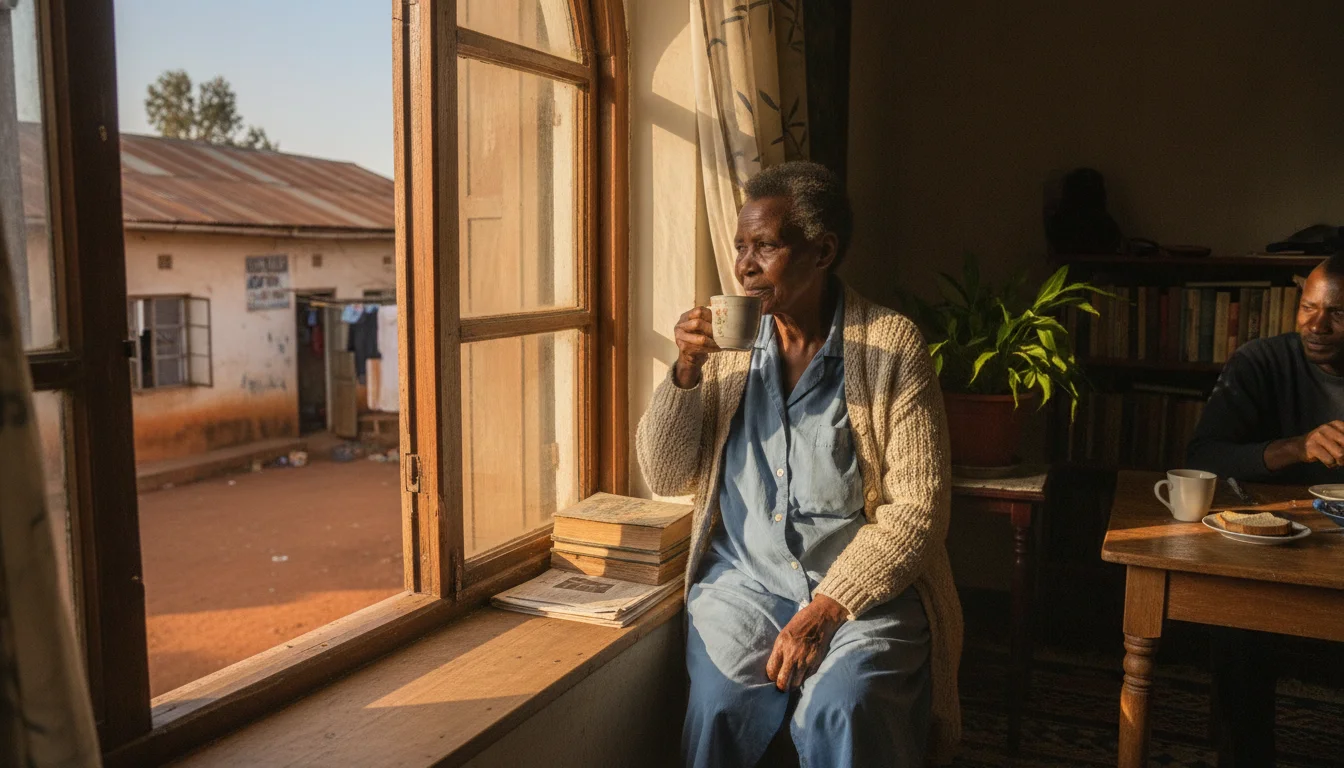
That gap, between what the sender does and what the dormancy rule measures, is the whole piece. The Kenyan MPs now asking Safaricom about balances on deactivated lines are chasing the same gap at the regulator end. Nothing they do in the next few months changes the habit the family needs tonight.
The clock, in three stages
Safaricom and the Kenyan regulator do not pull the balance in one step. The line slides through three stages, and the money gets further from your family at each one.
- About 90 days of no activity: the SIM is suspended and the M-Pesa account is archived. The money is not spent or lost. It is parked in Safaricom's internal account, out of reach of the line until the account is reactivated.
- About 6 months of no activity: the line is deactivated and the number can be recycled. Safaricom's own public line is that the full deactivation and recycle follows "more than six months" without a top-up. The Communications Authority of Kenya published a draft rule in September 2026 that would make this six-month timing the industry rule for every telco, after a three-month flag and three further months of outreach. Treat the six-month mark as the real deactivation point in planning.
- Two years with the balance still unclaimed: the money moves to the government. Every year, by 1 November, Safaricom hands balances dormant for more than two years to the Unclaimed Financial Assets Authority (UFAA). The money is still yours. It is just no longer at Safaricom.
The three dates matter because the right habit kills the clock at the first stage, before any of the harder bits start.
What counts as activity (and what does not)
Safaricom's dormancy clock watches activity on the line, in Kenya, done by the person who holds the phone. That means something like:
- buying airtime on the line
- making a call or sending an SMS
- a Lipa Na M-Pesa payment at a shop
- sending or withdrawing M-Pesa
- a PayBill or Buy Goods transaction
An incoming M-Pesa transfer from the diaspora, a balance that sits there untouched, a balance check on its own: none of these reset the clock. The clock is watching whether the person holding the SIM is doing something, and a credit arriving in the wallet from outside is not that.
This is why a family can top up Mum reliably for a year, see the receipt every month, and still have the line slip toward archive. The money was coming in. Nobody was spending any of it out.
Catch
Your monthly top-up from the UK or the Gulf does not count as activity on Mum's line. The clock only resets when someone on the Kenyan side does something on the phone.
The one habit that stops it
The whole piece comes down to this. Give it to the family in a message they can screenshot.
Tip
Once a month, use the line in Kenya. The simplest version: open M-Pesa and buy KES 20 (about 12p) of airtime on the line itself. Any of these also works: a Lipa Na M-Pesa payment at a shop, sending any amount of M-Pesa to another number, or paying a PayBill. A missed call or an incoming transfer does not count.
Pick the one habit that fits your family. Mum who uses the phone mainly to call the clinic can buy herself airtime every first Sunday. A nephew with the SIM in his second phone can pay for his lunch with Lipa Na M-Pesa once in the month. Both reset the clock the same way.
On your end, there is a lighter second habit. Each month when the Wise, Sendwave or Remitly receipt arrives, send Mum one line: "Buy KES 20 airtime today?" One SMS back from her is proof the line is live for another month.
What if the balance is already in the deeper stages
Two things can happen if the clock has already run on past the archive point.
If the line was archived but the person has another active Safaricom line on the same National ID, Safaricom started automatically returning archived M-Pesa balances to the active line in mid-2026. The match is on the ID or passport the account was opened with. The family does nothing; the money just reappears on the active account.
That rule is useful at home. It does not help if the person is the only holder of a single Kenyan line and that line went cold. In that case the balance stays in Safaricom's archive until it either reactivates (visit a Safaricom shop with the original ID) or the two-year clock runs out.
If the two-year clock has run out, the money is at UFAA. It is still your family's money. It is just that reclaiming it now means a government paper trail, not a shop visit. You can check at ufaa.go.ke or on *361# with the ID number. The claim process takes weeks for a straightforward own-ID claim, and months when the next of kin have to claim on behalf of someone who has died. Nothing about that process is quick, and the simpler goal is not to let it get there.
The parliamentary probe, briefly
The headline that prompted the recent worry is a petition from Thompson Kirongo, referred by Deputy Speaker Gladys Boss to the Public Petitions Committee. The committee is to look at whether the current deactivation and number-recycling practice is in line with consumer-protection, data-privacy and unclaimed-asset law, and specifically at balances on the lines of people who have died. No new rule has been issued yet. If one is, this page will update. The draft CAK six-month rule is a separate track, running at the regulator rather than in Parliament.
Nothing in either track changes what to tell the family tonight. The habit is the same.
So, should you worry
No, and yes. Not about Mum's balance disappearing overnight: the money is protected in the archive, and even at UFAA it is still hers. But yes about a quiet drift, over months and years, that is easier to prevent than to unwind. The whole purpose of using M-Pesa as a formal channel is that money moves predictably. The dormancy clock is one of the places that predictability needs a little help from the Kenyan side.
So the single thing worth remembering, and worth passing on: a twenty-shilling airtime top-up on Mum's own line, bought in Kenya, once a month. That is what the clock measures. The transfer you send from here keeps the balance; the small thing she buys on the phone keeps the line that holds it.
Corrections
None so far. If we get something wrong, the fix is dated here.