
Safaricom cut M-PESA fees on 1 August 2026. The news headlines said the fees were halved. They did not say who keeps the saving. Here is what your family in Kenya actually pays now, and where the change reaches the person spending your remittance.
What changed, and when
Two dates matter, and they are not the same day.
- 1 August 2026 – Pochi la Biashara. The small-trader tariff. The free tier for the customer paying doubled from KSh 100 to KSh 200. This one is a 3-month promotion, running to 31 October 2026. If Safaricom does not extend it, the old ladder returns.
- 7 August 2026 – Buy Goods (the till in the shop). The shop’s free tier doubled from KSh 200 to KSh 500. Above that, the shop still pays 0.55 percent of the sale, capped at KSh 200. This is a cut to the shop’s cost. The customer’s cost was zero and remains zero.
- Also on 7 August, Safaricom halved the fee a shop pays to move money out of its till account, and lowered the fee a shop pays into a PayBill. Both are the shop’s cost. The customer never sees them.
The Central Bank of Kenya framed the move as “customer-centric” pricing. In practice, most of it is a saving for the business, not for the customer.
At the till, the shopper does not save. The shop does.
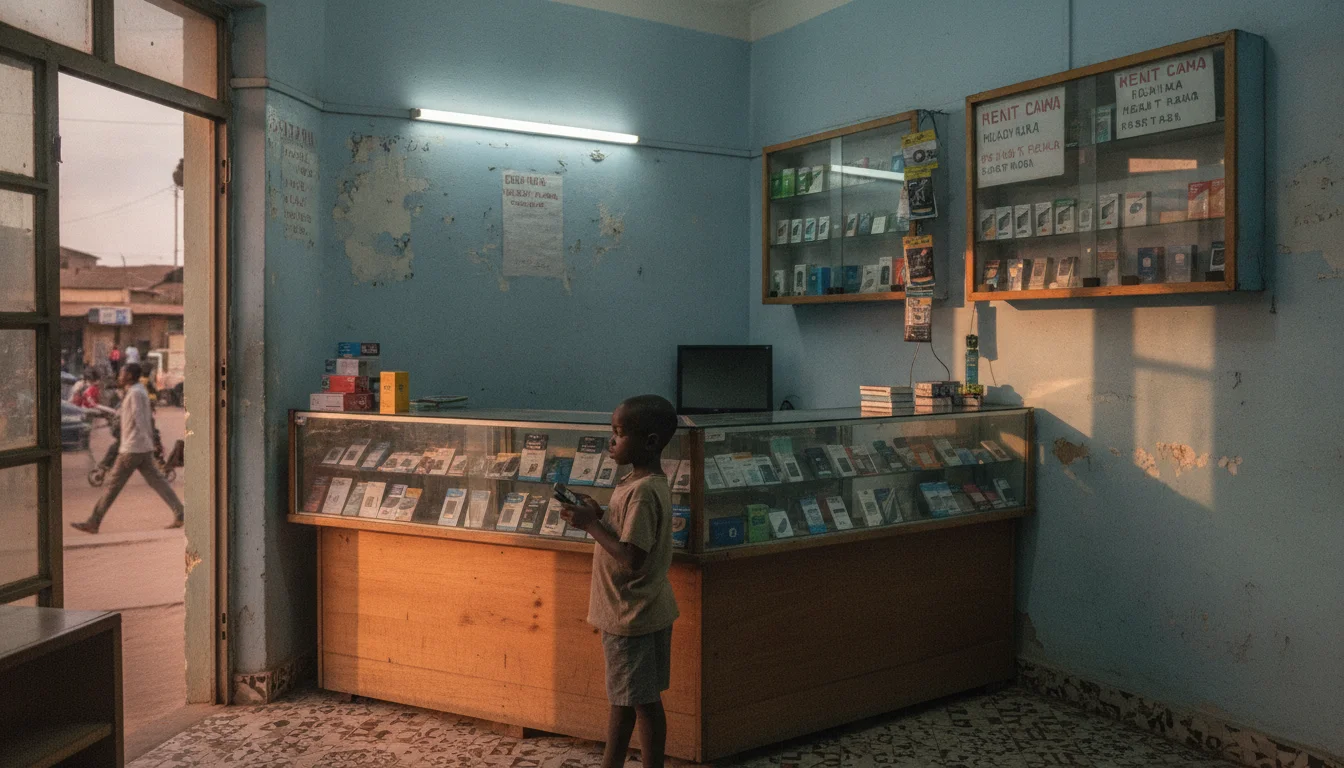
When your relative walks into a duka and taps Buy Goods, they pay nothing. They paid nothing before this week. They pay nothing now. What changed is the cost the shopkeeper pays behind the counter.
Whether the shopkeeper drops the shelf price by a shilling or two, keeps the saving, or is on a bespoke rate that ignores the tariff card, is a decision each shop makes. Kenya has around a million active tills. You cannot generalise. Do not tell your family the shop got cheaper. If prices drop where they normally spend, they will notice. If they do not, the shopkeeper did what a lot of shopkeepers will do.
Paying a small trader (Pochi la Biashara)
Pochi la Biashara is the number a small trader gives you when they do not have a formal till. A matatu conductor, a boda rider, a market seller. This one is on the customer, so the 1 August change actually reaches the person spending.
Old ladder: customer paid nothing up to KSh 100, and paid on everything above. From 1 August 2026, the free tier is KSh 200. On the ladder above:
- KSh 201 to KSh 500: KSh 7
- KSh 501 to KSh 1,000: KSh 13
- KSh 1,001 to KSh 1,500: KSh 23
- KSh 1,501 to KSh 2,500: KSh 33
- KSh 2,501 to KSh 250,000: KSh 50
On a KSh 150 matatu fare paid via Pochi, the customer saves the small charge they used to pay in the KSh 101 to KSh 200 band. It is not a lot, but it is real, and it is theirs.
One catch worth naming: this is a 90-day promotion. Unless Safaricom extends it, the old rates come back on 1 November 2026. Note the date.
Paying a household bill (PayBill)
Nothing in the 1 August or 7 August cuts touches the PayBill zero-cost path. In Kenya, most household bills are paid through PayBill, and the most common setup is called Customer Bouquet (you may also see it labelled Bila Malipo). Under that setup, the business pays the fee, not the customer. Kenya Power, the big banks, most private schools, most hospitals, most large landlords are on it. If the money is meant for one of those, the person receiving still pays nothing to send it there.
The other PayBill setup is Business Bouquet, where the customer pays a small charge instead. That is the opposite of what the English words sound like, so it is worth reading twice: Customer Bouquet means the business is paying; Business Bouquet means the customer is paying. The 1 August changes do not touch either one.
Sending on to another wallet
The wallet-to-wallet Send Money fee is not touched by these merchant cuts. If the person receiving forwards the cash to another mobile number, the old ladder still runs. A forward of KSh 20,001 or more still costs the ceiling of KSh 108. The 15 July 2026 change (Airtel matching M-PESA prices) still holds. Nothing on the merchant tariff card reaches the peer-to-peer send.
What this changes for you, in London
The fee to send from Wise, Lemfi, WorldRemit, Sendwave, or Remitly to a Kenyan M-PESA number is set on your side. Nothing on the 1 August or 7 August tariff card touches what you pay from the UK. If you searched “M-PESA fees cut” hoping the send got cheaper, the send did not get cheaper. The receive side got a bit cheaper in one place (Pochi), for three months.
For the plain breakdown of which of those apps to open, and what a £200 send actually costs through each, see our full guide to the cheapest way to send money to Kenya from the UK.
The number that actually lands
On 2 August 2026, the real exchange rate, the one you get if you search it on Google, was 1 GBP for 173.9 KES. Here is what lands in the wallet if you send with Wise, before the person receiving spends any of it:
| You send | Rate on the day | Lands in the wallet |
|---|---|---|
| £100 | 1 = 173.9 KES | about 17,390 KES |
| £300 | 1 = 173.9 KES | about 52,170 KES |
| £1,000 | 1 = 173.9 KES | about 173,900 KES |
These are the shape of the number, not a promise. The rate moves through the week. Run the actual quote in your app before you send.
The clean line to tell your family
At a proper till in a shop, they pay nothing to use M-PESA. That did not change this week and it has not changed for a long time. At a Pochi, the free tier just doubled to KSh 200, and it holds for three months. A household bill paid straight to a Customer Bouquet PayBill still costs them nothing to send. Everything else the tariff card did on 1 August and 7 August was a saving for the shop, not for them.